You know how some people can't stand knuckle-cracking or gum popping? Well, the thing that bugs me are certain intellectual facts that I just can't stand people getting wrong. This probably proves I'm a jerk, but there's stuff that bugs me. That probably makes me has been appearing in a lot of books lately, a fair amount of it wrong.
Now, if I wanted to cop out and blame my childhood, I'd say that my father used to always say that authors and screenwriters should not misrepresent or falsify history and then claim that they are telling truth, because people will believe that it is true when it isn't. (Let's just say, my father did not approve of Disney's Hercules.) I feel no embarrassment in having grown up to share this view.
When it comes to old stories being referenced in new stories, I get frustrated when people falsify the original story, and my flexibility on there is limited.
I mean, if you want to tell me that we were wrong about the Persephone story and it actually wasn't as shady as we've always thought, I'll accept that, at least to a point. Tell me how we got the story wrong and tell me what actually happened, and I'll accept that, so long as you haven't ignored the other facts (original mythos).
If you want to paint Artemis as a self-centered, shrill bint who only cares about clothes, I'm going to stop listening to you, because by that point you're just making stuff up and completely ignoring the entire base literature. To me, this is unforgivable.
So, yes, my intellectual pet peeve: people picking an original set of facts and lying about them/misrepresenting them.
This kind of pet peeve bugs a lot of people. It definitely bugs a lot of writers and artists, Captain Film Major for one. But I stand by it, if and only if because I already know from a lot of experience that it was not stop bugging me, to varying degrees. Just like my pet peeve will probably not stop bugging the people it bugs, again to varying degrees.
What's your intellectual pet peeve? Other pet peeves? Does my pet peeve bug you?
Showing posts with label Captain Film Major. Show all posts
Showing posts with label Captain Film Major. Show all posts
Wednesday, January 11, 2012


Wednesday, August 10, 2011
So Bad It's Good?
The other day, Captain Film Major mentioned that when he comes across a bad line or scene in a movie, he'll rewind and watch it over again. When I asked why he would want to inflict that on himself a second/third/umpteenth time, he said he wanted to make sure it was really as bad as he'd originally thought.
Though this originally struck me as a little unusual (read: crazy weird) it's since dawned on me that it's not the most uncommon thing. After all, when I'm reading a conversation that seems to be going off the rails or the character is saying something utterly ridiculous, I find myself pausing to redirect the scene or patch up the rocky bits. I find myself trying to save it. Is that so different from Captain Film Major trying to see if maybe it wasn't that bad.
This leads me to an interesting thought. Normally, as writers, we are told to revisit works we considered particularly fantastic so that we could study what that author did right. Might it not also be worth our time to consider some things that were particularly awful so that we can see just went wrong and, possibly how it could have been made better?
Maybe studying things that we thought we massive train wrecks could actually be a useful tool for finding the errors in our own work and learning to correct them.
Do you ever find yourself revising work that's already done/published/released for your viewing pleasure? Have you ever read/watched/studied something just for its level of badness? Is there something to be learned from work that was just plain awful?
Though this originally struck me as a little unusual (read: crazy weird) it's since dawned on me that it's not the most uncommon thing. After all, when I'm reading a conversation that seems to be going off the rails or the character is saying something utterly ridiculous, I find myself pausing to redirect the scene or patch up the rocky bits. I find myself trying to save it. Is that so different from Captain Film Major trying to see if maybe it wasn't that bad.
This leads me to an interesting thought. Normally, as writers, we are told to revisit works we considered particularly fantastic so that we could study what that author did right. Might it not also be worth our time to consider some things that were particularly awful so that we can see just went wrong and, possibly how it could have been made better?
Maybe studying things that we thought we massive train wrecks could actually be a useful tool for finding the errors in our own work and learning to correct them.
Do you ever find yourself revising work that's already done/published/released for your viewing pleasure? Have you ever read/watched/studied something just for its level of badness? Is there something to be learned from work that was just plain awful?
Monday, November 29, 2010
Wrapping It Up
First of all, Happy Belated Thanksgiving. Somehow, going to see my family, not really sleeping, spending too much time on trains, I forgot to wish you all a happy holiday. I hope my American readers -- and any non-American readers who celebrated the holiday anyway -- had a great time. I did.
Okay, this post might feel a little random. It's because I'm totally cracked. I'm blaming NaNo. Not that it's really NaNo's fault, but it's just so convenient.
Speaking of NaNo, it's actually going pretty well. I made 48.8k on Sunday. It's looking good for winning this year! (That's not a jinx, I think, because at this point, I'm ready to give up all sleep to make it happen.) True, I won't be done with the story the same time I'm done NaNo (I'm envisioning at least 5k more words here), but just because you've hit a goal word count is no reason to stop writing. You can always cut and trim and shave later. The original word count goal is more of a guideline than an actual rule. (See that POTC reference? I make those because they make me smile.)
I'm a little amped as I write this, because I'm listening to the soundtrack of Next to Normal, which is awesome. I saw it this weekend with my family. The Other One and I loved it. Captain Film Major said it was okay. My parents split between us. But, since I'm the one writing this post, my view's the one that gets reiterated (notice my blatant abuse of my power? I thought you might): Next to Normal rocked. Definitely worth seeing.
I will note one thing about the show. Captain Film Major and my father expressed the view that it's hard to pinpoint the exact main character of the piece. This is true. I think of it as more of an ensemble piece that a story with an MC -- though their is one character whose actions drive the plot.
This makes me wonder, can books be ensemble pieces? I've seen and worked on ensemble plays. However, I'm not sure I've read a book that I would call an ensemble book. Usually, in my experience, books have a single MC whose actions pull the story forward. However, I'm ready to believe I'm wrong about this or have just read books differently than others might have.
How's your NaNo going? Almost there? How's that feel?
How do you feel about ensemble stories? Single MC stories? Which to you write? Which do you read? To ensemble books exist?
Okay, this post might feel a little random. It's because I'm totally cracked. I'm blaming NaNo. Not that it's really NaNo's fault, but it's just so convenient.
Speaking of NaNo, it's actually going pretty well. I made 48.8k on Sunday. It's looking good for winning this year! (That's not a jinx, I think, because at this point, I'm ready to give up all sleep to make it happen.) True, I won't be done with the story the same time I'm done NaNo (I'm envisioning at least 5k more words here), but just because you've hit a goal word count is no reason to stop writing. You can always cut and trim and shave later. The original word count goal is more of a guideline than an actual rule. (See that POTC reference? I make those because they make me smile.)
I'm a little amped as I write this, because I'm listening to the soundtrack of Next to Normal, which is awesome. I saw it this weekend with my family. The Other One and I loved it. Captain Film Major said it was okay. My parents split between us. But, since I'm the one writing this post, my view's the one that gets reiterated (notice my blatant abuse of my power? I thought you might): Next to Normal rocked. Definitely worth seeing.
I will note one thing about the show. Captain Film Major and my father expressed the view that it's hard to pinpoint the exact main character of the piece. This is true. I think of it as more of an ensemble piece that a story with an MC -- though their is one character whose actions drive the plot.
This makes me wonder, can books be ensemble pieces? I've seen and worked on ensemble plays. However, I'm not sure I've read a book that I would call an ensemble book. Usually, in my experience, books have a single MC whose actions pull the story forward. However, I'm ready to believe I'm wrong about this or have just read books differently than others might have.
How's your NaNo going? Almost there? How's that feel?
How do you feel about ensemble stories? Single MC stories? Which to you write? Which do you read? To ensemble books exist?
Monday, October 25, 2010
Character Movement
I feel like I've been on a character kick lately, but at least this time I'm taking it in a different direction.
(Note: Captain Film Major would like it noted that he believes one should like the MC from Fargo because she's nice. I feel like he believes that, but it wasn't part of the conversation I referenced. Still, Captain Film Major remains adamant a clarification of his stance was required. I cede on the clarification front, but not on rewatching that movie.)
To proceed to my point...
This weekend, I attended a mini-lecture on movement, mostly how movement and how people carry themselves relate to the characters. It was a very though-provoking idea. I enjoyed the lecture. (Note: We will not be discussing my physical experiences during the lecture, because that probably wasn't pretty. Anyone who's seen me attempt yoga knows that.)
This made me think about how my characters carry themselves. Mostly, about how Amira, from Cordamant's Heir, moves. The first time I conceptualized her character, I imagined her a lot more graceful than she really is. I'm not sure why. Maybe it's because ideas are so light and fluffy in my head. But, like a lot of the assumptions we make about our characters, we're not always right. (If you want to hear some more brilliant thoughts on this, click here to be redirected to Natalie Whipple's blog.)
I now realize that she's a little more awkward on her feet sometimes. She's not as good a dancer as her mother would like her to be, or really as good as she'd like to be, since she's not a fan of being bad at things. She does better with a weapon in her hand, but dancing while holding a sword is often considered bad form, even where she lives. It gets better, but she's not the best. And if I think about it more, I can think why she moves the way she does, why she's better with swords than dance steps.
I like that about her, but it's not the sort of thing I'd recognized about her when I first started writing, because I didn't think about it. Now, though, I'm starting to think that I should think about movement more. Movement comes from who the character is, and by thinking about it, we can get a gateway into who they are and how they live. I might have to add movement to my Character Charts.
How do your characters move? Why? What does it say about them?
(Note: Captain Film Major would like it noted that he believes one should like the MC from Fargo because she's nice. I feel like he believes that, but it wasn't part of the conversation I referenced. Still, Captain Film Major remains adamant a clarification of his stance was required. I cede on the clarification front, but not on rewatching that movie.)
To proceed to my point...
This weekend, I attended a mini-lecture on movement, mostly how movement and how people carry themselves relate to the characters. It was a very though-provoking idea. I enjoyed the lecture. (Note: We will not be discussing my physical experiences during the lecture, because that probably wasn't pretty. Anyone who's seen me attempt yoga knows that.)
This made me think about how my characters carry themselves. Mostly, about how Amira, from Cordamant's Heir, moves. The first time I conceptualized her character, I imagined her a lot more graceful than she really is. I'm not sure why. Maybe it's because ideas are so light and fluffy in my head. But, like a lot of the assumptions we make about our characters, we're not always right. (If you want to hear some more brilliant thoughts on this, click here to be redirected to Natalie Whipple's blog.)
I now realize that she's a little more awkward on her feet sometimes. She's not as good a dancer as her mother would like her to be, or really as good as she'd like to be, since she's not a fan of being bad at things. She does better with a weapon in her hand, but dancing while holding a sword is often considered bad form, even where she lives. It gets better, but she's not the best. And if I think about it more, I can think why she moves the way she does, why she's better with swords than dance steps.
I like that about her, but it's not the sort of thing I'd recognized about her when I first started writing, because I didn't think about it. Now, though, I'm starting to think that I should think about movement more. Movement comes from who the character is, and by thinking about it, we can get a gateway into who they are and how they live. I might have to add movement to my Character Charts.
How do your characters move? Why? What does it say about them?
Friday, October 22, 2010
Loving and Cheating
To return to the film that inspired this week's posts (in case you didn't know I've been building on a theme), I don't feel bonded to the MCs of Fargo. During one of our perennial debates about this movie, Captain Film Major said to me, "How can you not feel something for her? She's pregnant and investigating a murder, which is dangerous."
To such an argument, all I can say is, "CHEAT!" (Or, to quote Tom Stoppard's Arcadia, "Cheat! Cheat! Cheat! I hope you die!" But I try not to take Fargo that seriously.)
As far as I'm concerned, telling me that I should like a character because they're pregnant is cheating. So is telling me I should like them because they're left handed, have three eyes, or happen to look like my sister. Really, telling me that I should like them for any other reason than that they are a likable person is a cheat.
Much like showing me that your villain is a bad guy by having him kick a dog (and we all know that's a bad idea, right?), it's not okay to tell me that I should like your MC just because he's playing with a dog in the first scene. It's too easy. Maybe he's an ax murderer who happens to own a dog. In which case, you've a decent villain, not a likable hero.
Writing is hard work. I understand that. But there are reasons it's hard, and one of those reasons is that when you slack off, it shows. Really shows. I mean, everyone knows. They know, and when they put down the book, they talk about you. "Can you believe it? So-and-so didn't even bother to characterize the MC. All So-and-so ever says is that the MC really likes puppies. But come on, everyone likes puppies. Lame." **I do not promise that the dialogue will always look exactly like that**
But, here's the deal, most people like puppies and kittens. Most people like babies. Most people feel some empathy for pregnant women, people with disabilities or diseases, and/or people in untenable positions over which they have little control. However, none of these qualities or states of being, should your character possess them and/or be in them, actually constitute a likable person. After all, if you write a serial killer who gets picked on for having three eyes, I'm probably going say, "He's a serial killer. Who cares?"
Therefore, if you say, "You should feel sympathy/empathy/deep personal concern/love for my MC just because she's pregnant/he's in the unfortunate situation of having three arms/dogs love my MC," I'm going to call you a cheat. Most people, I think, would agree with me. Because those aren't likable characters. They're just people I usually feel something for.
I do not have an obligatory Harry Potter reference for this post. Why? Because I don't recall J.K. Rowling ever doing something like this. Good work, J.K. Rowling.
To sum up this week: You want the reader to love your characters. To do this, you'll have to give them something in the character to love. And this something better be something real about the character, not a stock sympathetic attribute, or it will not have the desired effect.
Have you ever run across characters that were more sympathetic type than actually sympathetic? Did this work on you? How did you feel about the character? Did your feelings about this character effect your view of the work as a whole?
To such an argument, all I can say is, "CHEAT!" (Or, to quote Tom Stoppard's Arcadia, "Cheat! Cheat! Cheat! I hope you die!" But I try not to take Fargo that seriously.)
As far as I'm concerned, telling me that I should like a character because they're pregnant is cheating. So is telling me I should like them because they're left handed, have three eyes, or happen to look like my sister. Really, telling me that I should like them for any other reason than that they are a likable person is a cheat.
Much like showing me that your villain is a bad guy by having him kick a dog (and we all know that's a bad idea, right?), it's not okay to tell me that I should like your MC just because he's playing with a dog in the first scene. It's too easy. Maybe he's an ax murderer who happens to own a dog. In which case, you've a decent villain, not a likable hero.
Writing is hard work. I understand that. But there are reasons it's hard, and one of those reasons is that when you slack off, it shows. Really shows. I mean, everyone knows. They know, and when they put down the book, they talk about you. "Can you believe it? So-and-so didn't even bother to characterize the MC. All So-and-so ever says is that the MC really likes puppies. But come on, everyone likes puppies. Lame." **I do not promise that the dialogue will always look exactly like that**
But, here's the deal, most people like puppies and kittens. Most people like babies. Most people feel some empathy for pregnant women, people with disabilities or diseases, and/or people in untenable positions over which they have little control. However, none of these qualities or states of being, should your character possess them and/or be in them, actually constitute a likable person. After all, if you write a serial killer who gets picked on for having three eyes, I'm probably going say, "He's a serial killer. Who cares?"
Therefore, if you say, "You should feel sympathy/empathy/deep personal concern/love for my MC just because she's pregnant/he's in the unfortunate situation of having three arms/dogs love my MC," I'm going to call you a cheat. Most people, I think, would agree with me. Because those aren't likable characters. They're just people I usually feel something for.
I do not have an obligatory Harry Potter reference for this post. Why? Because I don't recall J.K. Rowling ever doing something like this. Good work, J.K. Rowling.
To sum up this week: You want the reader to love your characters. To do this, you'll have to give them something in the character to love. And this something better be something real about the character, not a stock sympathetic attribute, or it will not have the desired effect.
Have you ever run across characters that were more sympathetic type than actually sympathetic? Did this work on you? How did you feel about the character? Did your feelings about this character effect your view of the work as a whole?
Monday, October 18, 2010
You Want My Love
Well, not you specifically. But your character wants it. Or, at least, they should. Here's why.
Okay, obligatory statement of the obvious: Captain Film Major and I disagree on movies. (I know. You're all having heart attacks and dying from that surprise.) But, to bother being specific in this case, we disagree about the movie Fargo.
I highly anticipate that some of you are going to disagree with me about this one, and you can feel free to express that. But, basically, Captain Film Major loves that movie. Me, well, when he made me watch it, I contemplated violence against myself to escape. Nothing serious, just that feeling of, 'Hey, if I stab myself in the eye, can I stop watching now?'
Here's my deal with Fargo: I don't give a flying flamingo about any of the characters. Not one of them. There was no one in the movie to whom I felt an emotional connection. So, though this film is considered a cinema classic, I never want to see it again. It bored the living daylights outta me.
Why? Because when I'm watching a film/reading a book/hearing a story about people I don't care about do things I thereby don't care about, I tend to get bored.
In my experience, most people are the same way. Ever been stuck on a train with a stranger who wants to tell you about their second cousin's root canal? And you're just sitting there thinking, "And I care about this why? I hope this person gets off at the next stop. Please, Whatever Higher Power Happens to Be Listening, please let them get off at the next stop." Whereas, if it's your best friend telling you about their grueling trip to your dentist, you'll probably care more. People tend not to care about the doings and feelings of those to whom they have no connection.
Those rules that apply to strangers on a train apply to characters. If the reader feels no emotional connection to the character, no love, then they're not going to care about the character or anything that happens to him or her. Whereas, if you've made the reader fall in love with/feel great love for the character, then the reader will feel their joy and pain. That's what you're going for. Make the reader suffer, so they can enjoy the success.
Think of it this way: Harry Potter. Harry's a nice, down-trodden kid who gets picked on. So you're rooting for him when he gets to leave. Then he's taken and put into a situation where he's inexperienced and doesn't have a clue what to do, so he's got to maneuver in unfamiliar territory where not everyone is friendly, even t hough you know that since he's nice and down-trodden, this is all really unfair. So you're rooting for him when he makes friends and figuring it all out. (Quidditch!) Then he has to save the world, which is really, really hard, and he's doing his best. So you're rooting for him when he tries. Harry's a nice guy doing his best in a hard situation, so you like him.
Instead, now, picture Draco Malfoy in his place. Draco's an annoying, arrogant jerk. So you don't care about his feelings when Harry tells him to shove off. Then he goes to a school where he's already accorded some respect for being a pure-blood and, by virtue of his blood and wealth, already has some power and friends. So you don't care about any struggles he has at school, since they don't seem that back. Then he wants to get in the way of someone trying to save the world. So you really wish Ron and Harry could push him off a glacier and make it look like an accident.
Getting the reader to love the character's important. So, you're going to have to make the character lovable. Once you've got the reader to love the character, you can lead the reader through the ups and downs of the fascinating story, and the reader will stay interested. Because they care about what happens to the character.
Your characters feeling the love?
How's your writing going? Do you ever have trouble getting readers to love your characters? Have you ever run along characters you just can't care for? How did this effect your reading/viewing/listening experience?
Okay, obligatory statement of the obvious: Captain Film Major and I disagree on movies. (I know. You're all having heart attacks and dying from that surprise.) But, to bother being specific in this case, we disagree about the movie Fargo.
I highly anticipate that some of you are going to disagree with me about this one, and you can feel free to express that. But, basically, Captain Film Major loves that movie. Me, well, when he made me watch it, I contemplated violence against myself to escape. Nothing serious, just that feeling of, 'Hey, if I stab myself in the eye, can I stop watching now?'
Here's my deal with Fargo: I don't give a flying flamingo about any of the characters. Not one of them. There was no one in the movie to whom I felt an emotional connection. So, though this film is considered a cinema classic, I never want to see it again. It bored the living daylights outta me.
Why? Because when I'm watching a film/reading a book/hearing a story about people I don't care about do things I thereby don't care about, I tend to get bored.
In my experience, most people are the same way. Ever been stuck on a train with a stranger who wants to tell you about their second cousin's root canal? And you're just sitting there thinking, "And I care about this why? I hope this person gets off at the next stop. Please, Whatever Higher Power Happens to Be Listening, please let them get off at the next stop." Whereas, if it's your best friend telling you about their grueling trip to your dentist, you'll probably care more. People tend not to care about the doings and feelings of those to whom they have no connection.
Those rules that apply to strangers on a train apply to characters. If the reader feels no emotional connection to the character, no love, then they're not going to care about the character or anything that happens to him or her. Whereas, if you've made the reader fall in love with/feel great love for the character, then the reader will feel their joy and pain. That's what you're going for. Make the reader suffer, so they can enjoy the success.
Think of it this way: Harry Potter. Harry's a nice, down-trodden kid who gets picked on. So you're rooting for him when he gets to leave. Then he's taken and put into a situation where he's inexperienced and doesn't have a clue what to do, so he's got to maneuver in unfamiliar territory where not everyone is friendly, even t
 hough you know that since he's nice and down-trodden, this is all really unfair. So you're rooting for him when he makes friends and figuring it all out. (Quidditch!) Then he has to save the world, which is really, really hard, and he's doing his best. So you're rooting for him when he tries. Harry's a nice guy doing his best in a hard situation, so you like him.
Instead, now, picture Draco Malfoy in his place. Draco's an annoying, arrogant jerk. So you don't care about his feelings when Harry tells him to shove off. Then he goes to a school where he's already accorded some respect for being a pure-blood and, by virtue of his blood and wealth, already has some power and friends. So you don't care about any struggles he has at school, since they don't seem that back. Then he wants to get in the way of someone trying to save the world. So you really wish Ron and Harry could push him off a glacier and make it look like an accident.
Getting the reader to love the character's important. So, you're going to have to make the character lovable. Once you've got the reader to love the character, you can lead the reader through the ups and downs of the fascinating story, and the reader will stay interested. Because they care about what happens to the character.
Your characters feeling the love?
How's your writing going? Do you ever have trouble getting readers to love your characters? Have you ever run along characters you just can't care for? How did this effect your reading/viewing/listening experience?
Monday, October 11, 2010
In Which I Reference Things No One's Seen
When I'm living in the same general vicinity of Captain Film Major, my life develops a refrain: "Are you serious? You haven't seen it? Why haven't you seen anything?" Not necessarily in that order or using those exact words every time, but it happens a lot. In his version of reality, I live in a bubble and have never seen any movies.
When I'm living in the actual world, I end up saying something very strange. Namely, "Are you serious? You haven't seen it? Why haven't you seen anything?" Usually not in that order or using those exact words every time, but it happens often enough and something along those lines.
This might be because, while I haven't watched a lot of TV or movies, and the books I've read aren't always the most mainstream (I hid from Twilight for more than a year), but that's never stopped me from referencing them. I make a lot of references, as it turns out. It's gotten to the point where some of my friends have told me, "If you're about to say, 'have you watched...' or 'have you read...' just assume the answer's no."
This makes me wonder, what references can we really expect people to get? Because, quite frankly, I don't expect everyone else on the planet to understand my insane quoting of West Wing (doesn't mean I don't think everyone should watch it, by the by), and I'm coming to terms with the fact that people don't run around quoting Shakespeare (though every time I realize that I get a little sad inside), but there are some things, I think, should be universally understood.
There are some things that we all walk around expecting people to have a working knowledge of. The plots of classics, such as Romeo and Juliet (though I swear I've seen someone screw that one up). The Bible. Major historical figures. (While kids are more likely to recognize Ronald McDonald than George Washington, I think we're all agreed you should know who he is.)
Then there are some things we don't classify as "important knowledge" but everyone has and you'll be surprised if someone doesn't. For example, Harry Potter. I'm not kidding. If you're not conversant in Harry Potter (and by conversant, I don't mean my level of creepy, quote-spouting fandom, I mean knowing the plot and characters), you will be missing things in American culture. How can I prove this? I heard someone reference it on the radio yesterday, fulling expecting to be understood by all listeners. And you know what, I feel very sure he was. (I, personally, think there will be a bullet-note in History classes on the 1990-2010 mentioning the phenomenon that was Harry Potter. But that's a story for another time.)
Then there are other things, like the stuff I go on about, that you might think people should know about but won't know about when you reference them. For example, when I say, "Men and women can never be friends, because the sex thing inevitably gets in the way," I, despite my disappointment, have to accept that most people won't understand that I mean When Harry Met Sally. (And, by the way, you need to go watch that movie. It's fabulous.)
I've a whole list of references I could make that no one in the world will get. I think we all do. Inside jokes with friends. Old movies and books we've seen and read that most people haven't. Songs by indie bands that never escaped our hometowns. They're great references, I'm sure.
We just can't make 'em. Or, really, we can. But at the right times and places. Which, often, aren't our books. References that aren't dated and we can expect any reasonable person to get are definitely fair game. Any other reference, if it's too obscure, will either need to be explained, which takes a long time, or it will go over everyone's head. Either way, it defeats the point.
There are exceptions to this, of course. If you're familiar with the show NCIS (catch that reference there), one of the characters, Tony, is a film buff, and he's constantly referencing films. But, for them to pull it off, it's done in a very specific way. First of all, they make it clear that this is something specific to that character. He's the only one running around making film references. Second of all, the references are almost all explained so that the viewer can understand the reference and why it's important.
References, though, outside of context to explain their importance or made by characters who wouldn't ordinarily be able to make that reference (ie: girl who never, ever, ever watches movies making a sudden, inexplicable Cary Grant reference) won't work. They'll be missed or they'll come off as strange. And not in a good, I'm-so-fascinated way. In the what-in-the-name-of-tortilla-chips is this person doing, this makes to no sense sort of way. Not the goal.
Trust, me, I've been the girl who gets people saying what-the-tortilla-chips, I'm that girl a lot, and it usually requires more time to explain than I want to devote words in an MS to pulling off. Making references people won't be able to understand is not the best use of our time.
By the by, we have some new members with us today. Hello, all! Nice to have you here. I'm sure you'll like it. I know I do. Anway, guys, this'll be the beginning of a beautiful friendship.
Do you often make references people don't understand? What's your thing(s) you reference that people don't get and you wish they would? How is your knowledge of Harry Potter, When Harry Met Sally, and Cary Grant films?
When I'm living in the actual world, I end up saying something very strange. Namely, "Are you serious? You haven't seen it? Why haven't you seen anything?" Usually not in that order or using those exact words every time, but it happens often enough and something along those lines.
This might be because, while I haven't watched a lot of TV or movies, and the books I've read aren't always the most mainstream (I hid from Twilight for more than a year), but that's never stopped me from referencing them. I make a lot of references, as it turns out. It's gotten to the point where some of my friends have told me, "If you're about to say, 'have you watched...' or 'have you read...' just assume the answer's no."
This makes me wonder, what references can we really expect people to get? Because, quite frankly, I don't expect everyone else on the planet to understand my insane quoting of West Wing (doesn't mean I don't think everyone should watch it, by the by), and I'm coming to terms with the fact that people don't run around quoting Shakespeare (though every time I realize that I get a little sad inside), but there are some things, I think, should be universally understood.
There are some things that we all walk around expecting people to have a working knowledge of. The plots of classics, such as Romeo and Juliet (though I swear I've seen someone screw that one up). The Bible. Major historical figures. (While kids are more likely to recognize Ronald McDonald than George Washington, I think we're all agreed you should know who he is.)
Then there are some things we don't classify as "important knowledge" but everyone has and you'll be surprised if someone doesn't. For example, Harry Potter. I'm not kidding. If you're not conversant in Harry Potter (and by conversant, I don't mean my level of creepy, quote-spouting fandom, I mean knowing the plot and characters), you will be missing things in American culture. How can I prove this? I heard someone reference it on the radio yesterday, fulling expecting to be understood by all listeners. And you know what, I feel very sure he was. (I, personally, think there will be a bullet-note in History classes on the 1990-2010 mentioning the phenomenon that was Harry Potter. But that's a story for another time.)
Then there are other things, like the stuff I go on about, that you might think people should know about but won't know about when you reference them. For example, when I say, "Men and women can never be friends, because the sex thing inevitably gets in the way," I, despite my disappointment, have to accept that most people won't understand that I mean When Harry Met Sally. (And, by the way, you need to go watch that movie. It's fabulous.)
I've a whole list of references I could make that no one in the world will get. I think we all do. Inside jokes with friends. Old movies and books we've seen and read that most people haven't. Songs by indie bands that never escaped our hometowns. They're great references, I'm sure.
We just can't make 'em. Or, really, we can. But at the right times and places. Which, often, aren't our books. References that aren't dated and we can expect any reasonable person to get are definitely fair game. Any other reference, if it's too obscure, will either need to be explained, which takes a long time, or it will go over everyone's head. Either way, it defeats the point.
There are exceptions to this, of course. If you're familiar with the show NCIS (catch that reference there), one of the characters, Tony, is a film buff, and he's constantly referencing films. But, for them to pull it off, it's done in a very specific way. First of all, they make it clear that this is something specific to that character. He's the only one running around making film references. Second of all, the references are almost all explained so that the viewer can understand the reference and why it's important.
References, though, outside of context to explain their importance or made by characters who wouldn't ordinarily be able to make that reference (ie: girl who never, ever, ever watches movies making a sudden, inexplicable Cary Grant reference) won't work. They'll be missed or they'll come off as strange. And not in a good, I'm-so-fascinated way. In the what-in-the-name-of-tortilla-chips is this person doing, this makes to no sense sort of way. Not the goal.
Trust, me, I've been the girl who gets people saying what-the-tortilla-chips, I'm that girl a lot, and it usually requires more time to explain than I want to devote words in an MS to pulling off. Making references people won't be able to understand is not the best use of our time.
By the by, we have some new members with us today. Hello, all! Nice to have you here. I'm sure you'll like it. I know I do. Anway, guys, this'll be the beginning of a beautiful friendship.
Do you often make references people don't understand? What's your thing(s) you reference that people don't get and you wish they would? How is your knowledge of Harry Potter, When Harry Met Sally, and Cary Grant films?
Friday, September 24, 2010
Character Roots
As I hop down from my censorship soapbox, I jumped on the bandwagon and doing a post today about writing compelling characters.
I think most people will agree with me when I say that compelling characters must be fully realized, rounded out characters. They have to be, otherwise there'd be nothing in them to relate to, and then no one would care about what happens to them. If you've ever read a book/watched a movie/seen a play/listened to a radio show where the characters are really just cardboard cutouts chilling in the story while the plot does its thing, then you know that can get old fast. After all, what's the point of watching people you don't care about do stuff, since you won't care if they succeed?
One thing that most fully realized and rounded out characters have are personality traits. You know, they have likes and dislikes, favorite things, things that scare them so much they scream like little girls as the sight/sound/taste of them.
Now, here's the kicker about personality traits: they can't be completely random.
Why? They'll make no sense, and they'll look like you put them there to make the character appear rounded out, and the audience will be able to smell it.
Story time: A while ago, Captain Film Major and I were discussing an old kid's movie, and he pointed out that the MC, a girl of about nine, I believe, had a big thing for Elvis. Captain Film Major's response to this was something along the lines of (and I'm paraphrasing, dude, so if you see this, chill), "It would've been great if they'd explained that at all, instead of just chucking it out there so that it made no sense." (Okay, so, I paraphrased a lot. Probably should've written the exact wording down. Note for next time.)
Much as it pains me to admit that Captain Film Major might have point about a movie, he had a point. Most nine-year-olds I've met aren't Elvis fans. Most probably couldn't tell you who The King is. So how did this character know? They don't say. They just say she likes Elvis. Now, if she'd said, "He was my dad's favorite... before he died. He used to sing along to the CDs when he did the dishes... drove Mom crazy," it would have had meaning. Because now we know how she developed this knowledge and interest, and we know a bit more about her character as a result.
Here's the deal: If you're character is anything like just about every human being I've ever met (and I've met a fair number of human beings), likes, dislikes, favorites, and phobias come about for some reason. There's often something in someone's background that led to that reaction.
Story time: I love Irish music. I listen to it all the time. Captain Film Major hates it. He listens to it never. He blames his dislike on having to listen to it all them time when we were kids. I blame my love on having to listen to it all the time when we were kids. Both of our responses to that music are not random but the result of things in our past.
Obligatory Harry Potter reference: (Contains SPOILERS!) (And, seriously, if you haven't read all 7 Harry Potter books, stop reading this post now and get on it.) (No, I'm not kidding. It's much more important. Go.) Severus Snape considered himself the Half Blood Prince, because he preferred to associate himself with his mother's side of the family, because he didn't like his Muggle father, because his dad beat his mom. See how that relates to his life. Snape wasn't a fan of really any Muggles, because his dad beat his mom, which is how he could so easily fall in with Death Eaters. Severus Snape loved Lily Evans (later Lily Potter), so he betrayed the Death Eaters, joined the Order of the Phoenix, fought against Voldemort, and did everything he could to keep Harry alive. See how that relates to his history?
(Okay, so that was several Harry Potter references, but I think I made my point.)
To create compelling characters, they have to be fully formed individuals, and they aren't going to be fully formed by being hashed together bits of randomness. Follow the random to the history that made them who they are, and follow the history you have to the everyday things that will present themselves in your character's life.
Have you ever come across a character seemingly composed of unrelated bits? How did you feel about that? Could you still relate to the character? How much time do you put into your characters' histories? Have you ever learned something about a character by looking for the cause of a seemingly random aspect of their personality?
I think most people will agree with me when I say that compelling characters must be fully realized, rounded out characters. They have to be, otherwise there'd be nothing in them to relate to, and then no one would care about what happens to them. If you've ever read a book/watched a movie/seen a play/listened to a radio show where the characters are really just cardboard cutouts chilling in the story while the plot does its thing, then you know that can get old fast. After all, what's the point of watching people you don't care about do stuff, since you won't care if they succeed?
One thing that most fully realized and rounded out characters have are personality traits. You know, they have likes and dislikes, favorite things, things that scare them so much they scream like little girls as the sight/sound/taste of them.
Now, here's the kicker about personality traits: they can't be completely random.
Why? They'll make no sense, and they'll look like you put them there to make the character appear rounded out, and the audience will be able to smell it.
Story time: A while ago, Captain Film Major and I were discussing an old kid's movie, and he pointed out that the MC, a girl of about nine, I believe, had a big thing for Elvis. Captain Film Major's response to this was something along the lines of (and I'm paraphrasing, dude, so if you see this, chill), "It would've been great if they'd explained that at all, instead of just chucking it out there so that it made no sense." (Okay, so, I paraphrased a lot. Probably should've written the exact wording down. Note for next time.)
Much as it pains me to admit that Captain Film Major might have point about a movie, he had a point. Most nine-year-olds I've met aren't Elvis fans. Most probably couldn't tell you who The King is. So how did this character know? They don't say. They just say she likes Elvis. Now, if she'd said, "He was my dad's favorite... before he died. He used to sing along to the CDs when he did the dishes... drove Mom crazy," it would have had meaning. Because now we know how she developed this knowledge and interest, and we know a bit more about her character as a result.
Here's the deal: If you're character is anything like just about every human being I've ever met (and I've met a fair number of human beings), likes, dislikes, favorites, and phobias come about for some reason. There's often something in someone's background that led to that reaction.
Story time: I love Irish music. I listen to it all the time. Captain Film Major hates it. He listens to it never. He blames his dislike on having to listen to it all them time when we were kids. I blame my love on having to listen to it all the time when we were kids. Both of our responses to that music are not random but the result of things in our past.
Obligatory Harry Potter reference: (Contains SPOILERS!) (And, seriously, if you haven't read all 7 Harry Potter books, stop reading this post now and get on it.) (No, I'm not kidding. It's much more important. Go.) Severus Snape considered himself the Half Blood Prince, because he preferred to associate himself with his mother's side of the family, because he didn't like his Muggle father, because his dad beat his mom. See how that relates to his life. Snape wasn't a fan of really any Muggles, because his dad beat his mom, which is how he could so easily fall in with Death Eaters. Severus Snape loved Lily Evans (later Lily Potter), so he betrayed the Death Eaters, joined the Order of the Phoenix, fought against Voldemort, and did everything he could to keep Harry alive. See how that relates to his history?
(Okay, so that was several Harry Potter references, but I think I made my point.)
To create compelling characters, they have to be fully formed individuals, and they aren't going to be fully formed by being hashed together bits of randomness. Follow the random to the history that made them who they are, and follow the history you have to the everyday things that will present themselves in your character's life.
Have you ever come across a character seemingly composed of unrelated bits? How did you feel about that? Could you still relate to the character? How much time do you put into your characters' histories? Have you ever learned something about a character by looking for the cause of a seemingly random aspect of their personality?
Wednesday, September 1, 2010
Ghosts
Captain Film Major recently used his extensive powers of persuasion (read: getting my mother to make her guilting face -- I can't say no to my mother) to convince me to watch The Ghost Writer. What can I say, I don't usually watch movies.
At any rate, in one scene in the movie, the MC remarks at a book launch that ghost writers are rarely invited to book launches, because they're something of a dirty secret. "Like a mistress at a wedding," he comments.
After my family and I recovered from the brilliance of that line, I started thinking about it. A large part of me wonders what it would be like to always be doing my writing for someone else. To not be able to really work on my own ideas, because I had to pursue someone else's vision. To not be able to put my own name on my work, because I wasn't supposed to exist.
I'm not sure I could do it. I've never tested this, but I think seeing my work on a bookshelf and having to pretend I didn't work on it might just kill me. (I guess that means I'll never be Lemony Snickett or Silence Dogood. Somehow, though, I'll survive that fear though.) I don't think I'd risk it on ghostwriting.
How about you? Could you ever work as a ghostwriter? How do you feel about ghostwriting?
At any rate, in one scene in the movie, the MC remarks at a book launch that ghost writers are rarely invited to book launches, because they're something of a dirty secret. "Like a mistress at a wedding," he comments.
After my family and I recovered from the brilliance of that line, I started thinking about it. A large part of me wonders what it would be like to always be doing my writing for someone else. To not be able to really work on my own ideas, because I had to pursue someone else's vision. To not be able to put my own name on my work, because I wasn't supposed to exist.
I'm not sure I could do it. I've never tested this, but I think seeing my work on a bookshelf and having to pretend I didn't work on it might just kill me. (I guess that means I'll never be Lemony Snickett or Silence Dogood. Somehow, though, I'll survive that fear though.) I don't think I'd risk it on ghostwriting.
How about you? Could you ever work as a ghostwriter? How do you feel about ghostwriting?
Wednesday, August 25, 2010
Gender Neutral?
The other day, I was chilling in my local used book store when I overheard a woman trying to find some books for her son. Well, since I'm the person who secretly wishes she worked in a bookstore (no, seriously, I want to get a job in a certain bookstore to stage a coup and reorganize their shelving system), and because I had free time and no life, I went over and offered her to help her find one.
Yes, for the record, my mother did tell me not to talk to strangers, but I think I'm mature enough to protect myself from random abduction by women in a bookstore who've never met me. (Any young people who've found their way onto this site, listen to your parents and don't take candy from strangers.)
During my conversation with this woman about the sort of books she was looking for for her son, we ended up on the topic of the limited availability of books for teen guys. The woman to whom I was speaking expressed the view that this was because the publishing industry was out to emasculate all guys and "take the boy out of the boy."
Now, I'm among the first to cede that there aren't enough books printed these days for guy readers. On the other hand, I'm rather inclined to believe that this is an entirely capitalist decision on their part, in that guys make up a smaller portion of modern readerships and therefore there are fewer books needed to fill the smaller economic niche, rather than that this is part of a subversive social scheme to feminize the youth of America.
Captain Film Major will probably hunt me down and kill me for admitting this online, but when we were kids, he listened to the Princess Diaries books on tape the same time my sister and I did, and I would never describe Captain Film Major as emasculated. (Because he'd want it known, I will also say, in defense of his macho standing, that he has never read The Twilight Saga. Or, to my knowledge, anything by Ally Carter.)
I've listened to Lord of the Rings on CD, and I worship Ender's Game, and I would rather like to start handing Percy Jackson and the Olympians out to complete strangers on the streets. These are all books by guys, about guys, pretty much for guys. In the case of the first two examples, almost every die hard fan I've met has been a guy. And you know what, I don't feel femasculated (or whatever word people are using these days to feel express someone being rendered less feminine).
Would it be nice if there were more books written by guys and about guys and for guys these days? Yeah, probably. It'd be kind of cool, in my view, if when I met an aspiring author under the age of 25, they had a Y chromosome. Male MC YA, there could definitely be more of that.
Are these books full of female MCs and all the female oriented YA out there emasculating our youth and "taking the boy out of the boy"? I think not. If what we read literally made us who we were, I'd be wandering around in a corset or an earwig, or expecting some villain to attack me with his minions/buggers/swords of death. I know tons of guys who read, and contact with books -- even books by girls about girls for girls -- didn't turn any of them into women.
How do you feel the wash of female-drive youth reading material effects today's youth? Do we need more books for young guys?
Yes, for the record, my mother did tell me not to talk to strangers, but I think I'm mature enough to protect myself from random abduction by women in a bookstore who've never met me. (Any young people who've found their way onto this site, listen to your parents and don't take candy from strangers.)
During my conversation with this woman about the sort of books she was looking for for her son, we ended up on the topic of the limited availability of books for teen guys. The woman to whom I was speaking expressed the view that this was because the publishing industry was out to emasculate all guys and "take the boy out of the boy."
Now, I'm among the first to cede that there aren't enough books printed these days for guy readers. On the other hand, I'm rather inclined to believe that this is an entirely capitalist decision on their part, in that guys make up a smaller portion of modern readerships and therefore there are fewer books needed to fill the smaller economic niche, rather than that this is part of a subversive social scheme to feminize the youth of America.
Captain Film Major will probably hunt me down and kill me for admitting this online, but when we were kids, he listened to the Princess Diaries books on tape the same time my sister and I did, and I would never describe Captain Film Major as emasculated. (Because he'd want it known, I will also say, in defense of his macho standing, that he has never read The Twilight Saga. Or, to my knowledge, anything by Ally Carter.)
I've listened to Lord of the Rings on CD, and I worship Ender's Game, and I would rather like to start handing Percy Jackson and the Olympians out to complete strangers on the streets. These are all books by guys, about guys, pretty much for guys. In the case of the first two examples, almost every die hard fan I've met has been a guy. And you know what, I don't feel femasculated (or whatever word people are using these days to feel express someone being rendered less feminine).
Would it be nice if there were more books written by guys and about guys and for guys these days? Yeah, probably. It'd be kind of cool, in my view, if when I met an aspiring author under the age of 25, they had a Y chromosome. Male MC YA, there could definitely be more of that.
Are these books full of female MCs and all the female oriented YA out there emasculating our youth and "taking the boy out of the boy"? I think not. If what we read literally made us who we were, I'd be wandering around in a corset or an earwig, or expecting some villain to attack me with his minions/buggers/swords of death. I know tons of guys who read, and contact with books -- even books by girls about girls for girls -- didn't turn any of them into women.
How do you feel the wash of female-drive youth reading material effects today's youth? Do we need more books for young guys?
Wednesday, August 18, 2010
Scott Pilgrim vs. the World
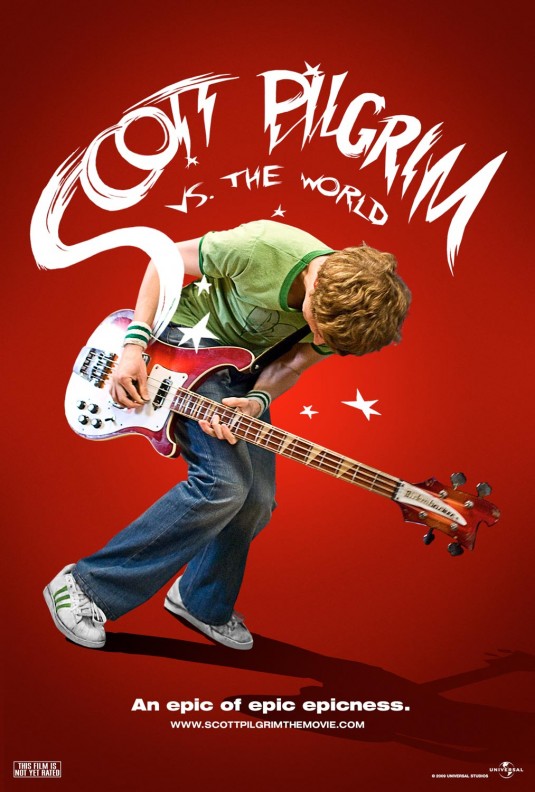 I don't normally interrupt my intended blog post ideas to talk about a movie -- okay, as far as any of you know, I don't generally interrupt my planned posts ever. On the blog, I can maintain a pleasant delusion that my whole life is entirely on purpose, and wouldn't that be lovely if it were true, but it isn't -- but I am interrupting my plans to talk about Scott Pilgrim vs. the World.
Yes, because I saw it on Tuesday night, and it was just that good.
When Captain Film Major first made me watch all the trailers -- yes, I'm reasonably sure he made me watch them all and here is commentary -- my initial reaction was, "This looks like a manga."
And why was that? Because it was based on a manga. Admittedly, I haven't read the manga yet, but I fully intend to check it out. (Yes, I read manga, and I refuse to be ashamed. ^_^ )
My second reaction: I must see this movie. The part that swayed me? Most likely that part in the trailer when he gets a life. (In case you're wondering, 2 minutes in. Go on, watch it. I'll wait.)
(No, seriously, I'll wait.)
When I get to the cinema, during the first 1.5 minutes, when you first see the blending of manga style and traditional film style, I first thought, "Oh, no, it's going to be a train wreck." Then, it smoothed out. By the end, they seemed to be blending the best of both styles. You got the humor of the cartoonish style and the chance to violate reality, and you also got the flow of movement not always present in manga and, let's face it, a bit more reality than is present in some things based on a manga series. (Yay for emotional continuity!)
Overall: This might actually constitute a 5 out of 5 stars, and I don't give those out often as you'd think. 5/5 :)
Cleanness: Minor swearing, light sexuality. I'd take a 13-year-old cousin to see this.
Violence: Minimal. That present is cartoonized. Zero gore. If a kid can hack Mario, they should be fine.
Friday, July 30, 2010
How Soon Is Too Soon?
On Wednesday, I gave into my compulsion and began revising my new ending to The Thief Book. Happy, happy, joy,joy. There's some serious changing going on, definitely cutting at least 2000 words, probably writing another 2000 or more. This'll be draft 3-ish. It'll be interesting.
A friend who Alpha read Draft 1 saw my revisions-in-progress and insisted I email her my newest work. I said, "Maybe after this draft." She prefers now. She's just got that sort of personality.
The part of me that wants to hear what someone else thinks would rather like me to send her draft 2.5. The part of me that knows that draft 2.5 contains bad dialogue, an unedited ending with lots of extra words, and a scene of ridiculous melodrama, say, "Mmm... I'm thinking no." I don't know just yet what side will win out.
This calls to mind for me a debate I had a few days ago with Captain Film Major about the writing process and, more specifically, early drafts.
It is my personal belief that a first draft is between a writer and maybe a trusted Alpha. However, I tend to let my first drafts only be scene by me. I like to keep my own schedule and let my own thoughts have a go first. Also, my first drafts tend to have unneeded scenes, excess prose, and poorly defined characters, because I'm often making things up as I go along and learning as I go.
Personally, I don't think the MS can defend itself against the criticism and critique of any other reader (who doesn't love it quite as much as I do) until it's in Draft 2 or 3 at least. Draft 1 is rough and no one needs to see that.
Captain Film Major endorsed getting another eye to look at one's work very soon in the process. In some ways, this view makes sense to me. When I worked on Miss Snitch, I gave the chapters to an Alpha as I wrote them. She could give me notes about the characters and plot arcs as they formed, which for that project I felt useful, since I was truly writing that one off the cuff and didn't always know if it all made sense. Sometimes, also, an Alpha can weigh in on plot and character and open a window for the story the author might not have seen before or notice a hole forming that the author is missing.
How do you feel about this issue? How long do you wait before showing your work to someone else? Does you time limit change with each project or are you always consistent?
A friend who Alpha read Draft 1 saw my revisions-in-progress and insisted I email her my newest work. I said, "Maybe after this draft." She prefers now. She's just got that sort of personality.
The part of me that wants to hear what someone else thinks would rather like me to send her draft 2.5. The part of me that knows that draft 2.5 contains bad dialogue, an unedited ending with lots of extra words, and a scene of ridiculous melodrama, say, "Mmm... I'm thinking no." I don't know just yet what side will win out.
This calls to mind for me a debate I had a few days ago with Captain Film Major about the writing process and, more specifically, early drafts.
It is my personal belief that a first draft is between a writer and maybe a trusted Alpha. However, I tend to let my first drafts only be scene by me. I like to keep my own schedule and let my own thoughts have a go first. Also, my first drafts tend to have unneeded scenes, excess prose, and poorly defined characters, because I'm often making things up as I go along and learning as I go.
Personally, I don't think the MS can defend itself against the criticism and critique of any other reader (who doesn't love it quite as much as I do) until it's in Draft 2 or 3 at least. Draft 1 is rough and no one needs to see that.
Captain Film Major endorsed getting another eye to look at one's work very soon in the process. In some ways, this view makes sense to me. When I worked on Miss Snitch, I gave the chapters to an Alpha as I wrote them. She could give me notes about the characters and plot arcs as they formed, which for that project I felt useful, since I was truly writing that one off the cuff and didn't always know if it all made sense. Sometimes, also, an Alpha can weigh in on plot and character and open a window for the story the author might not have seen before or notice a hole forming that the author is missing.
How do you feel about this issue? How long do you wait before showing your work to someone else? Does you time limit change with each project or are you always consistent?
Wednesday, July 28, 2010
Your Book Is Not You
I recently had a long discussion with Captain Film Major about how to respond to people disliking certain works in your oeuvre or in your genre. I tend not to take personally when someone doesn't like books I like or books in my genre. He, when it comes to cinema, sometimes does.
One sticking point that came up for us is that Captain Film Major said that he wanted people to like the movies that inspired him or movies of the sort he wanted to write, because he thought that if they didn't like those movies, then they wouldn't like his.
My reaction to that statement was something along the lines of, "But, your friends don't need to like your work. Your friends should like you."
That's when we reached the central focus of our disagreement. To sum up his response: "My work is me."
Okay, here's my deal: As far as I'm concerned, my work isn't me. My work is something I put a lot of time and effort into, and it is something I am passionate about. It represents my thought processes, my decision-making, and my struggling. Sometimes, it even represents some of my recollections. It does not, though, as far as I'm concerned, represent me.
How could it be me, after all? I'm not my MC(s). I'm not any of the other people either. There is no writer's cameo in my work.
I understand that others might have a different view. It is hard not to become strongly tied to one's creative work. It's not uncommon for an MS to represent the blood, sweat, and tears of a novelist. (Although, personally, I'm hoping it wasn't a tremendous amount of blood. And, really, if there's any blood, I'm hoping it's your own, because otherwise, that would be creepy.) However, I do flatter myself that I've found a healthy reaction to my work.
I don't think people should their work be them or themselves be their work. I've seen people put themselves into that place where all of their life was about one thing they did. Then, when someone rejected that one thing, that one aspect of their life, the person took it hard, because it felt like someone had rejected all of who they are.
I am not just one thing. I am not just my book(s). I am a friend. A daughter. A sister. A twin. A thespian. An American (and sometimes a Canadian). I am a cousin. A niece. A student. A listener. A speaker. A thinker. A doer.
I am not just a writer. And I don't think you are either. You are more than your books. You are you.
For other related reading, I recommend *Fiction Groupie*'s post. Click here.
Do you ever have trouble separating yourself from your work? Do you feel it's necessary to separate yourself from it?
One sticking point that came up for us is that Captain Film Major said that he wanted people to like the movies that inspired him or movies of the sort he wanted to write, because he thought that if they didn't like those movies, then they wouldn't like his.
My reaction to that statement was something along the lines of, "But, your friends don't need to like your work. Your friends should like you."
That's when we reached the central focus of our disagreement. To sum up his response: "My work is me."
Okay, here's my deal: As far as I'm concerned, my work isn't me. My work is something I put a lot of time and effort into, and it is something I am passionate about. It represents my thought processes, my decision-making, and my struggling. Sometimes, it even represents some of my recollections. It does not, though, as far as I'm concerned, represent me.
How could it be me, after all? I'm not my MC(s). I'm not any of the other people either. There is no writer's cameo in my work.
I understand that others might have a different view. It is hard not to become strongly tied to one's creative work. It's not uncommon for an MS to represent the blood, sweat, and tears of a novelist. (Although, personally, I'm hoping it wasn't a tremendous amount of blood. And, really, if there's any blood, I'm hoping it's your own, because otherwise, that would be creepy.) However, I do flatter myself that I've found a healthy reaction to my work.
I don't think people should their work be them or themselves be their work. I've seen people put themselves into that place where all of their life was about one thing they did. Then, when someone rejected that one thing, that one aspect of their life, the person took it hard, because it felt like someone had rejected all of who they are.
I am not just one thing. I am not just my book(s). I am a friend. A daughter. A sister. A twin. A thespian. An American (and sometimes a Canadian). I am a cousin. A niece. A student. A listener. A speaker. A thinker. A doer.
I am not just a writer. And I don't think you are either. You are more than your books. You are you.
For other related reading, I recommend *Fiction Groupie*'s post. Click here.
Do you ever have trouble separating yourself from your work? Do you feel it's necessary to separate yourself from it?
Wednesday, January 20, 2010
Because I'm Supposed To
In case you couldn't tell yesterday, I liked the movie Avatar (No, this is still not a movie review. Sorry). I liked it more than some people did, and on a scale of 1-10, I know I gave it a higher review than some people did. I know this, because I had to give it a rating on 1-10 and ended up on the receiving end of a Captain Film Major mini-lecture on my taste in movies.
Here's the deal: I was always going to like that movie. That was sort of a foregone conclusion. I'm the sort of person who likes that sort of movie. Sure, there are aspects of the plot that have been done before (in other movies I liked, actually), and there might have been a few things I might have done differently, but I was going to like that movie. I was their target audience.
Other times, I've come out of movie theaters and said, "Nah, didn't care for it." And those were often predictable as well. Because I knew going in that I was not the sort of person who liked that sort of movie. (I'm not going to name names, because I don't want to diss things on the blog. Though, people who know me who are reading this might recognize what flicks I'm talking about.) It drives Captain Film Major crazy when I say this in movie discussion, but I do believe that there are some things that I'm not going to like, because I'm not the target audience. That doesn't mean I think these were bad works. It just means that I didn't like them, and that that was a predictable thing.
I believe that everything -- books, movies, music, everything -- has a target audience. If they're very good, they'll have a lot of appeal outside that target audience or just a very wide target audience, but there's still a group the maker is hoping to reach. Those within the target group are expected to like it and those outside it aren't really expected to. They still can, but there isn't the same expectation of enjoyment. The system isn't infallible, but there's a certain expectation.
Are there guys who read the Princess Diaries series by Meg Cabot. Yes, I know there are. I've met some. Were they the target audience? No. So, if you meet a guy who says he doesn't find them interesting, you're not surprised. After all, he wasn't the target audience. You didn't expect him to be into it.
There are all sorts of different target audiences. If it's a demographic, it can be a target audience. For books, we break things down all sorts of different ways: age, genre, style. Even length could lend itself to a certain target audience, because those are different sorts of readers. I'm writing YA and I figure that for the most part the readers would be girls. They're my target audience.
Do you believe in target audiences for books? What's your target audience?
Here's the deal: I was always going to like that movie. That was sort of a foregone conclusion. I'm the sort of person who likes that sort of movie. Sure, there are aspects of the plot that have been done before (in other movies I liked, actually), and there might have been a few things I might have done differently, but I was going to like that movie. I was their target audience.
Other times, I've come out of movie theaters and said, "Nah, didn't care for it." And those were often predictable as well. Because I knew going in that I was not the sort of person who liked that sort of movie. (I'm not going to name names, because I don't want to diss things on the blog. Though, people who know me who are reading this might recognize what flicks I'm talking about.) It drives Captain Film Major crazy when I say this in movie discussion, but I do believe that there are some things that I'm not going to like, because I'm not the target audience. That doesn't mean I think these were bad works. It just means that I didn't like them, and that that was a predictable thing.
I believe that everything -- books, movies, music, everything -- has a target audience. If they're very good, they'll have a lot of appeal outside that target audience or just a very wide target audience, but there's still a group the maker is hoping to reach. Those within the target group are expected to like it and those outside it aren't really expected to. They still can, but there isn't the same expectation of enjoyment. The system isn't infallible, but there's a certain expectation.
Are there guys who read the Princess Diaries series by Meg Cabot. Yes, I know there are. I've met some. Were they the target audience? No. So, if you meet a guy who says he doesn't find them interesting, you're not surprised. After all, he wasn't the target audience. You didn't expect him to be into it.
There are all sorts of different target audiences. If it's a demographic, it can be a target audience. For books, we break things down all sorts of different ways: age, genre, style. Even length could lend itself to a certain target audience, because those are different sorts of readers. I'm writing YA and I figure that for the most part the readers would be girls. They're my target audience.
Do you believe in target audiences for books? What's your target audience?
Tuesday, January 19, 2010
Blinded by the Light
 About a fortnight ago, I went to see the movie Avatar. As we left the movie, my brother, Captain Film Major, asked me, "What'd you think of it?"
In all honesty, I admitted I couldn't say. Now, me not having an opinion on something is a strange thing. If I don't have an opinion on something, I can usually generate one in 5.4 seconds. So not having one about Avatar was a bit weird. But I knew why I couldn't say anything. "I was seduced by how pretty it was."
Yes, the first time I saw Avatar my initial impression was, "It's pretty." I'm just easy like that. Go ahead, make you jokes. My ego can take it, I think. (Since seeing it again -- long-ish story involving 3D glasses-- I've moved past it's beauty to still give it a 9 out of 10. [Captain Film Major, if you're thinking of mocking that, you can just bugger off. I liked the movie.] Anyway...)
You're probably wondering what this all has to do with books, because I didn't come over here to write a movie review. Shocker, I know. What I'm curious about is the blinding effect of the beauty.
I know that this is not a groundbreaking revelation: People's judgment may be obscured to altered by the attractiveness of the subject at hand. Yes, I know, our species can be a little shallow like that at times. But, that doesn't tend to happen to me. At least, not with this medium.
Sure, I've seen paintings that commanded my eyes. I think we all have. And music can move me to tears. But this would be the first time that the prettiness of a movie warped my thoughts. And now I feel compelled to wonder, does my mind get warped by the Pretty when it comes to books as well?
It seems logical that sometimes we'll suffer through boring plot or repugnant characters for the sake of beautiful or well-crafted writing. We suffer through a lot worse in our lives for the sake of Pretty. Besides, I don't think most people read those books they were assigned in class because the books were just ever so fascinating. Instead, the caliber of the writing kept folks going.
Even Shakespeare is like that sometimes. Every now and then I look at a monologue and think, "Dude, was someone doing a costume change here and you needed three minutes? This speech isn't m
 oving the plot along at all. Why'd he bother?"
But, you know, you miss those thoughts the first read through, because it's Shakespeare, and it's pretty, and it's eloquent, so you let the words wash over you and it doesn't matter that the speech serves no purpose. Okay, maybe if you aren't a Shakespeare geek, you're thinking, "No, he could have cut that whole act. The pretty isn't blinding me on this one." But I get a little blinded, and I think even hard-core Shakespeare fans have to admit to a little Pretty-blindness every now and then.
Does this happen to you? Do you get blinded by the prettiness of the writing and overlook the other qualities of the piece? What book was so pretty it blinded you? How much do you let the prettiness of the prose compensate for the other aspects?
Also, if you're keeping track, this happens to be my 200th blog post. I hope you enjoyed it. :D
Subscribe to:
Posts (Atom)


